group

LaBoîte is in Chambéry and integrates AI into the small businesses, shops, tradespeople and practices of the urban area: an audit of how you work, a choice between Claude and ChatGPT, connections to your calendar, quotes and CRM, team training and ongoing support. Workshops take place at your premises, and every use rests on written rules for data and human review.
In Chambéry, AI rarely arrives through a big project. It comes in through an employee rewording an email on their phone, a manager drafting a job advert in the evening, an assistant summarising a call for tenders. These experiments help, but they stay individual, often on personal accounts, and nothing links the tool to the rest of the business.
Our job is to turn those isolated trials into a team practice that is framed and connected. Here is how we run an AI integration with a business in the Chambéry area; our web agency in Chambéry page presents our other services in the city.
What does an AI integration cover for a Chambéry business?
Five stages, handled end to end: auditing how you work, choosing the tools, connecting them, training and follow-up. You keep the final say at every step.
The starting point is never a piece of software. Together we look at an ordinary week in the business: what comes back again and again, what gets copied by hand, what waits because nobody has the time. That list yields a first use case, chosen because it is frequent, easy to check and free of sensitive data.
- Audit: the tasks that eat up the week, and the ones that must stay in your hands
- Choosing the tools: Claude or ChatGPT, tried on your real documents, on a business plan
- Connections: calendar, quotes, CRM, messaging and website, so AI works where you work
- Training: workshops at your premises, built on your own examples
- Follow-up: a log of conversations, adjustments as usage grows, and one contact to report a problem to
Why do so many small businesses stay at the trial stage?
Because the tool is adopted without being linked to anything else. The France Num 2026 barometer shows a clear gap between using AI and actually automating tasks.
According to this barometer, published in September 2026 by the Direction générale des Entreprises (the French government’s directorate for business), 40 % of very small and small-to-medium firms now use an artificial intelligence solution. Generating text, voice or images dominates; task automation concerns only 11 % of businesses, and just 19 % pay for a solution.
For a shop or a small firm in Savoie, that gap has a concrete cost: the minute saved on an email is lost again copying the reply into the quoting software or the calendar. That missing link is what we deal with, through our custom automation and tools offer. Our guide on what to automate in your business sets out the general approach; this page brings it down to the ground in Chambéry.
Which tasks should you hand over first, depending on your trade?
The ones that recur every week and can be checked quickly. They differ a great deal between a town-centre shop and a small firm at the technology park.
The city counts 1,400 shops and craft businesses in Chambéry, 650 of them in the town centre. For them, AI is first a help with messages: answering questions about opening hours or stock, preparing a social post, writing a product description from a few notes. At Savoie Technolac, the innovation park between La Motte-Servolex and Le Bourget-du-Lac, 240 innovative companies are based, half of them in energy: their needs lean more towards monitoring their market and preparing technical bids.
- A town-centre shop: a draft reply to messages, reviewed before it is sent, and product pages for an online store that complements the physical shop rather than competing with it
- A tradesperson in a neighbouring village: a quote prepared from site notes, which the tradesperson checks and signs
- An energy company at Technolac: a summary of each call for tenders and a first outline of the technical proposal drawn from past bids
- A health practice: a reception assistant restricted to practical questions, within strict limits on what it may receive
How do the training workshops work inside the business?
In small groups, on your own documents, with one simple rule: everything AI prepares is reviewed by a person. Being neighbours means we can come back a few weeks later to correct bad habits.
Training is part of the integration, not its closing act. Everyone learns to write a clear instruction, to spot an invented answer and to take back control. We start from the tasks identified during the audit: one workshop on quotes for the sales team, another on messages for reception, a third for management on the rules of use.
The EU AI Act actually makes this an obligation: its Article 4, applicable since 2 February 2025, requires every business that uses these tools to take measures so that its staff understand them and their risks. The European Commission specifies that no certificate is required. Anyone looking for AI training in Chambéry will find here a format built on their own tools rather than a generic course.
What rules should you set for your data and your customers?
A one-page policy, business plans and a clear notice whenever a customer is talking to an AI. We write it with you before the first connection.
In its questions and answers on generative AI, the CNIL (the French data protection authority) advises framing use with an internal policy, banning the entry of certain confidential or personal data and checking outputs before relying on them. We turn that into a short document: permitted tools, which accounts to use, information that never leaves the business.
For the tools themselves, we pick plans whose terms exclude training on your conversations, which is the default for Anthropic’s commercial products and for the OpenAI API. If an assistant answers your customers on the website or by messaging, the transparency rules of the EU AI Act have applied since 2 August 2026: the person must know they are talking to an AI. Our comparison Claude or ChatGPT for business helps you choose the right plan.
What does Corsiva OS say about the way we connect tools?
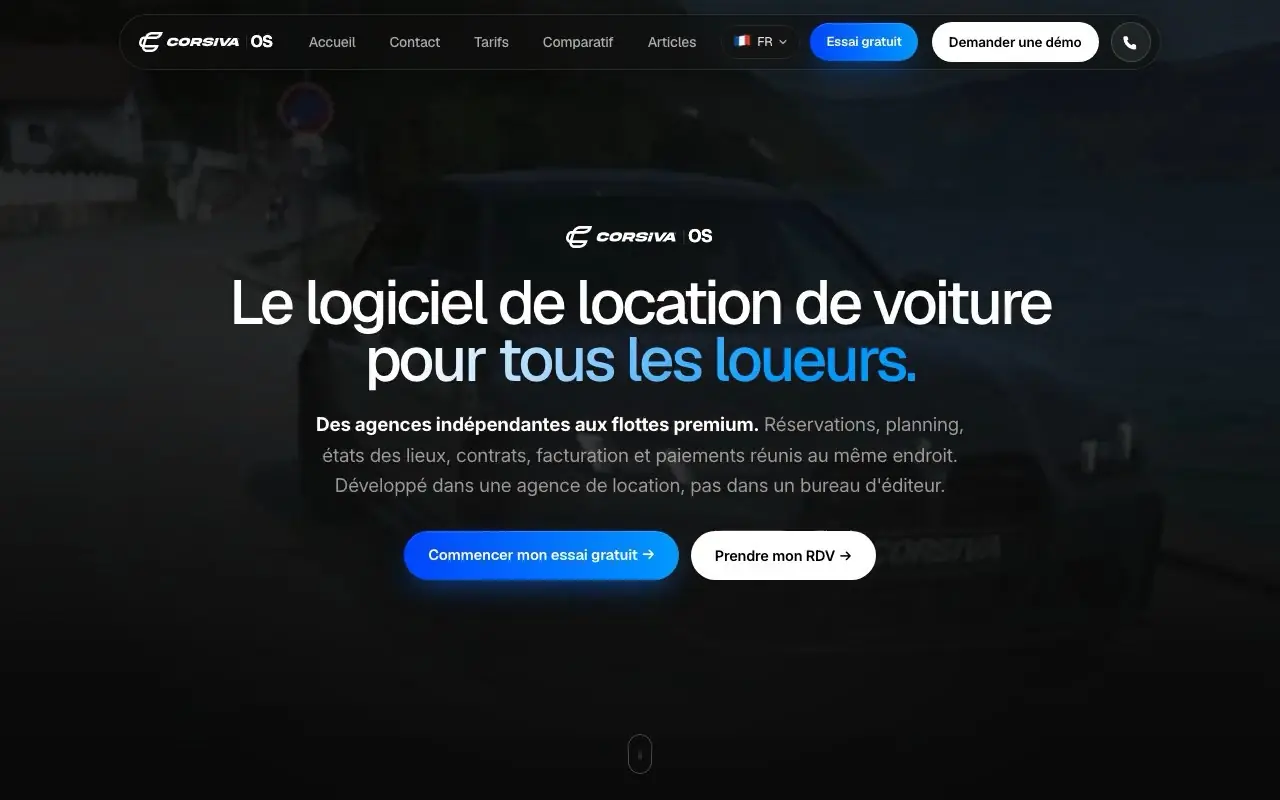
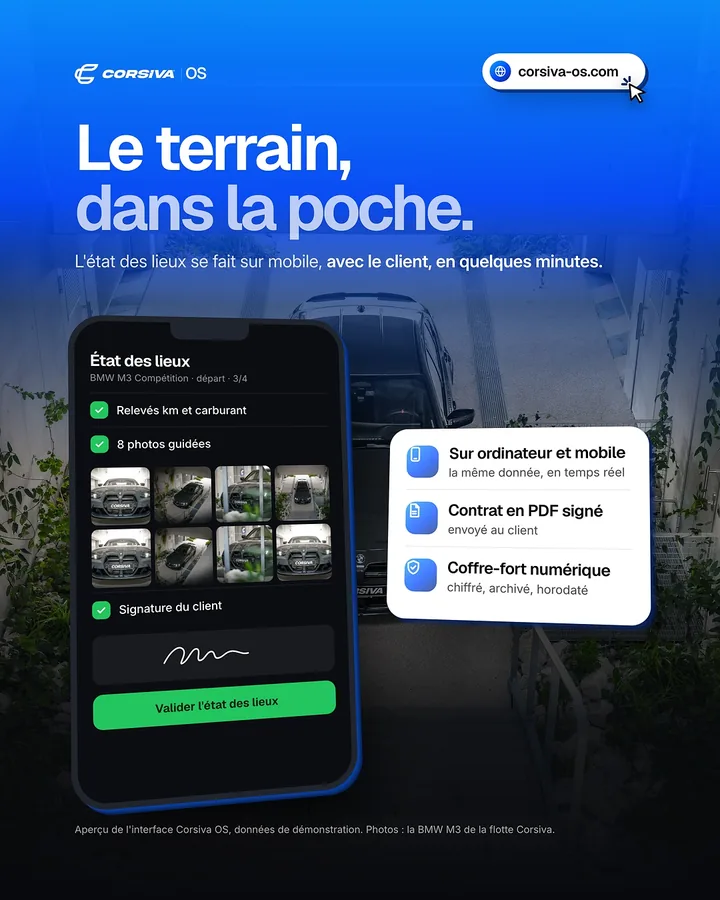
That we know how to build and connect business software, not just give advice. Corsiva OS, which we designed for the Chambéry-based Corsiva group, brings together bookings, scheduling, contracts and payments.
It is not an AI project, and we do not present it as one. What it does show is the know-how a serious integration demands: understanding how a team works, linking a booking site to an internal tool, moving information around without retyping it. The approach is described in the Groupe Corsiva case study, and the software itself falls under our apps and software offer.
With AI, we follow the same rule: connect in read-only mode first, test, then extend. An assistant that consults your calendar books nothing on its own until the team has approved how it behaves.
Frequently asked questions
Do you need to be a large company to integrate AI?
No. A shop or a tradesperson can start with a business subscription and a single, well-chosen use. What matters is the time taken to frame it, train people and check the results.
Do you come out to the whole urban area?
Yes. Grand Chambéry brings together 38 municipalities, from the city centre to the villages of the Bauges: we come to you for the audit and the workshops, and the rest moves forward by video call.
Can AI answer our customers on its own?
Not at first. We start with internal tasks reviewed by a person. A customer-facing assistant comes later, with limited topics, a visible notice that it is an AI and a handover to your team.
How do we get started?
With a first conversation through our contact page: you describe a typical week, and together we pick out the first use to test.
Updated · LaBoîte, Chambéry, Savoie