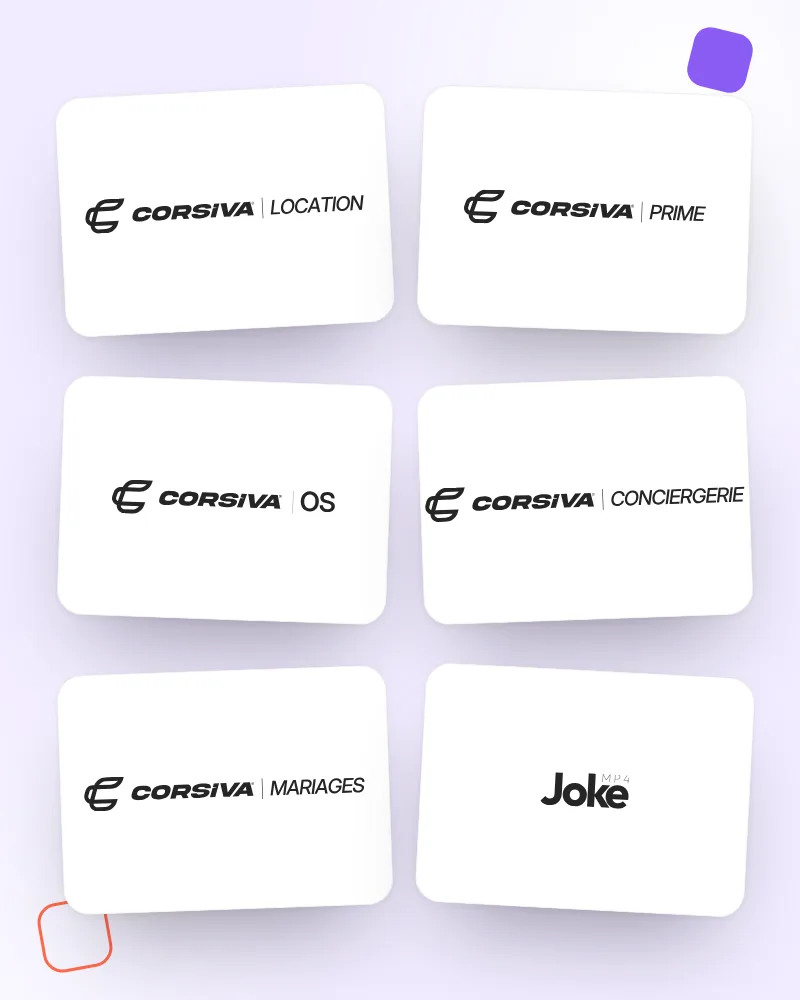
group

A separate brand for each business makes sense when audiences, promises and tones differ so much that they get in each other’s way; a single name is enough when you sell roughly the same thing to the same clients. The Corsiva group, in Chambéry, took a middle path: one family under the Corsiva name, a logo for each business, and two distinct tones for the concierge service and the wedding service.
A rental company looking for software, a couple planning their wedding, an owner handing over their car: three people with nothing in common, who may nonetheless come across the same name. That is the situation of the Corsiva group, in Savoie in the French Alps.
Here is how we organised its five brands, and the criteria that help any multi-business company make the call.
Five businesses under one name: where was the difficulty?
The group brings together five businesses: Corsiva Location, for luxury car rental; Corsiva Prime, for luxury car imports and tailored support; Corsiva OS, software designed for rental companies; Corsiva Conciergerie, a car service for owners; and Corsiva Mariages, for couples getting married.
The common thread is cars. The clients, though, are nothing alike: a professional comparing software, a private customer booking for the weekend, a couple organising the journeys on the big day. A single message would have spoken badly to all of them.
Single brand, brand family or separate brands: what are the options?
There are three main ways to organise several businesses. None of them suits everyone: it all depends on what your clients need to understand first.
- A single brand: one name, one logo, a section for each business. Simple and economical, as long as the audiences overlap.
- A brand family: a shared name plus the business line, with its own logo for each. Trust carries across, and every business keeps its own voice.
- Independent brands: names with no visible link. Useful when one business must not be associated with the others, at the risk of building awareness from scratch every time.
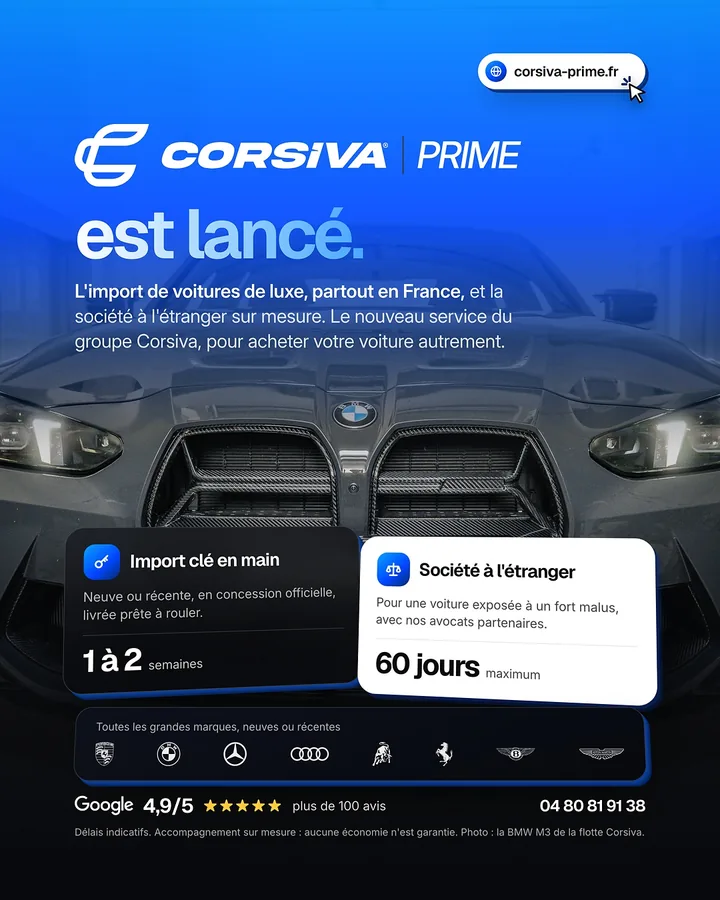
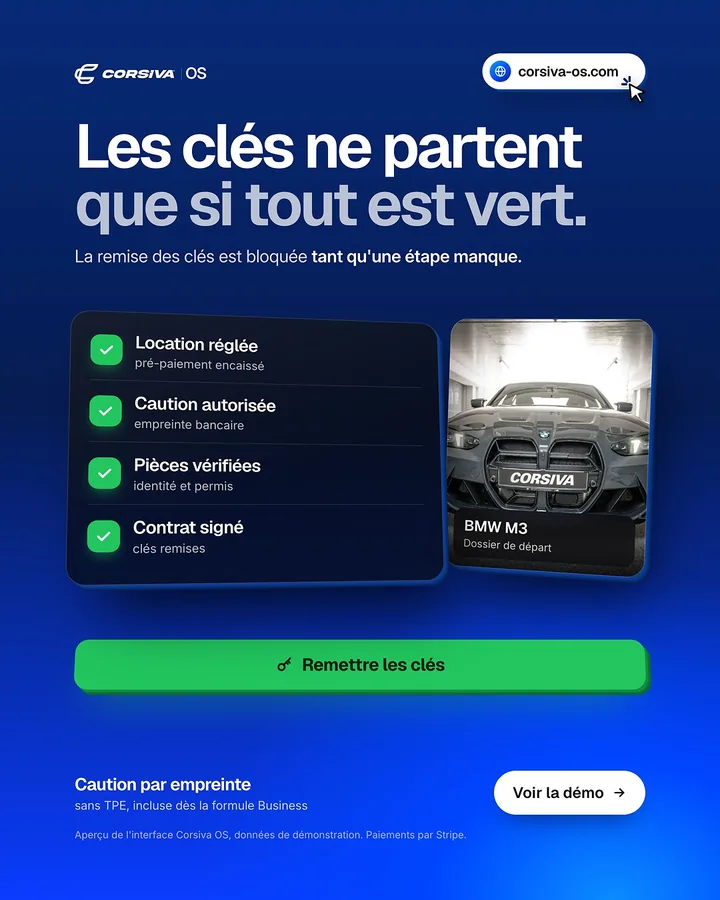
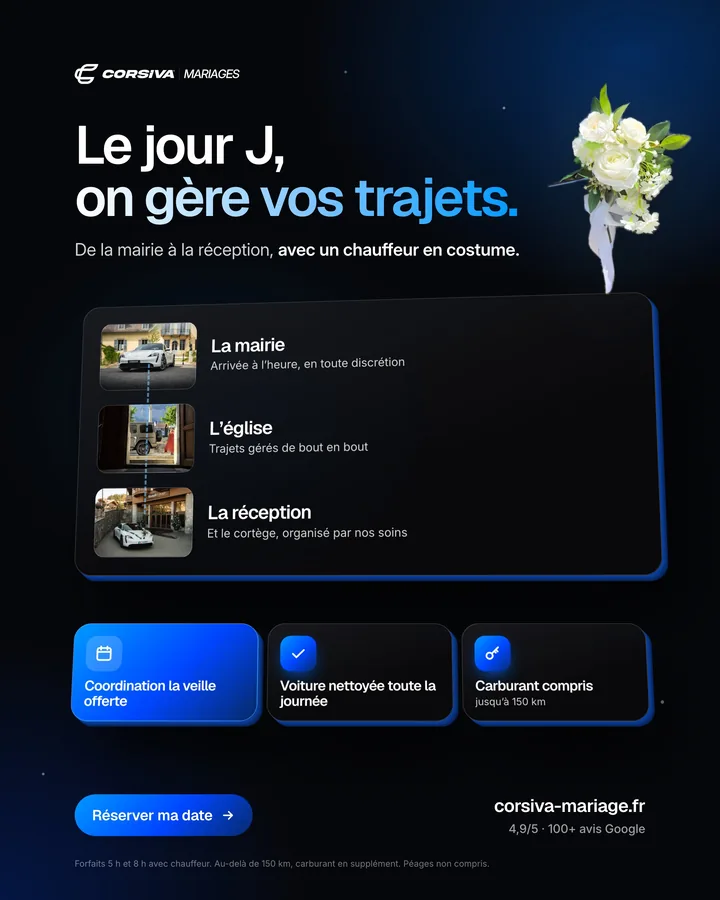
 Corsiva Prime, Corsiva OS, Corsiva Mariages: three brands in the group, one family. Created by LaBoîte.See the case study
Why a family rather than a single name at Corsiva?
Keeping the Corsiva name on every business lets each new one benefit from what clients already know about the group, instead of starting from zero. But each business had to be recognisable at a glance, on a social post as on a search results page. Hence the rule that sums up the project: a logo for each business, one family.
For the concierge service and the weddings, we went further: two businesses, two tones. One speaks to owners entrusting their car, the other to couples planning a celebration. Each has its own pages, visuals and Instagram ads, with Reels shot alongside the Corsiva team. The details are on the Corsiva group project page.
Which criteria should you use to decide in your business?
Ask these questions business by business. The more answers come back “yes”, the stronger the case for a separate brand, or at least a separate logo.
- Are the clients different, to the point that they never look for both services?
- Does the promise change: speed here, bespoke there, emotion elsewhere?
- Would the positioning or the tone clash on the same page?
- Could an incident in one business damage the reputation of the others?
- Might you one day sell a business or bring in a partner?
- Do you have the resources to keep one more brand alive? A brand left without content does more harm than a well-kept section.
How do you keep the family likeness without making everything the same?
A brand family rests on a clear split between what never changes and what varies from one business to the next. The three posts shown with this article illustrate the principle: the same standards, three voices. Write that split into a short brand guide and hand it to every supplier:
- Shared by all: the root name, the typography, the way the business line is written, the standard for photos
- Specific to each: the logo, the main colour, the tone of the copy, the subjects of the visuals
- Decided case by case: the website, the social accounts, the campaigns
Should each brand be protected separately?
Before any design work, check that each name is available. INPI, the French intellectual property office, recommends searching three registers: trade marks, in France and abroad, company names and domain names. It advises having the results interpreted by an IP attorney.
A trade mark is registered for goods and services sorted into the classes of the Nice Classification. Each business has its own: make sure your filings cover them all. If your clients are international, the EUIPO points out that an EU trade mark covers every member state with a single application, but on an all-or-nothing basis.
What can a multi-business company in Savoie take from this?
In Savoie, running several businesses side by side is common: a hotel that also rents out equipment, a craftsman who opens a shop, an estate that welcomes guests. The question comes up with the second business, and it is better settled before the first logo than after.
Start with your offer strategy: who buys what, with which promise. Visual identity comes next, as our guide to building your brand explains. Our article on the launch of Corsiva Prime shows how a new brand joins an existing family. Our team is based in the Rhône-Alpes region and runs these workshops on site, in Chambéry (in French) or elsewhere.
- A single name is enough when clients and promise overlap.
- A brand family keeps the strength of the shared name and gives each business its own voice.
- At Corsiva: five businesses, a logo for each, two tones for the concierge service and the weddings.
- The criteria: audiences, promises, tone, reputational risk, the resources to keep each brand alive.
- Every name is checked and protected before the first sketch.
Frequently asked questions
How many brands can a small business keep alive?
As many as it can feed. Each brand needs pages, accounts, regular content and sometimes advertising. If a business does not justify that effort, a well-crafted section under the main brand will do a better job.
Can brands created separately be brought together later?
Yes, but it comes at a cost: new signage, new materials, redirects from the old websites, clients to inform. It is better to set the architecture early, even if you only open the sub-brands as each one launches.
Do I need an Instagram account for each brand?
When the audiences genuinely differ, yes: someone getting married does not follow fleet management software. At Corsiva, the concierge service and the weddings each have their own visuals and Instagram ads. If the audiences overlap, one well-organised shared account is enough.
We review your businesses, audiences and names, then propose a brand architecture and an identity to match, on a quote basis. Let’s book a call.
- INPI, Checking the availability of a trade mark, company name or domain name (in French)
- INPI, International classifications (Nice Classification) (in French)
- EUIPO, Where to register your trade mark (in French)
- LinkedIn, Showcase Pages FAQ (in French)
Pages accessed on 13 October 2026. The brands mentioned belong to their owners.